Invoicing plays a crucial role in VAT compliance in Saudi Arabia (KSA), serving as a vital component for businesses registered under VAT. Ensuring the issuance of invoices for all taxable transactions of goods or services is imperative. These invoices must adhere to specific criteria outlined in the VAT law regarding details, language, currency, and more.
Moreover, invoices hold significant importance for recipients of taxable supplies, as they enable registered recipients to reclaim input tax based on valid and comprehensive invoices.
Let’s delve into the various types of invoices essential for VAT compliance in KSA.
1. Simplified Tax Invoice
The Simplified Tax Invoice is typically issued for B2C (Business-to-Consumer) transactions where the supply value is less than SAR 1,000. It includes essential information such as:
-
-
- Supplier name and address
- Invoice serial number
- Transaction date
- Description of goods or services
- Total amount including VAT
- QR Code (Mandatory under e-invoicing regulations)
-

2-Tax Invoice
A Tax Invoice is mandatory for B2B (Business-to-Business) transactions or supplies exceeding SAR 1,000. This invoice contains more comprehensive details, including:
Buyer and supplier VAT registration numbers
Price breakdown with VAT amount
Applied VAT rates
Payment terms
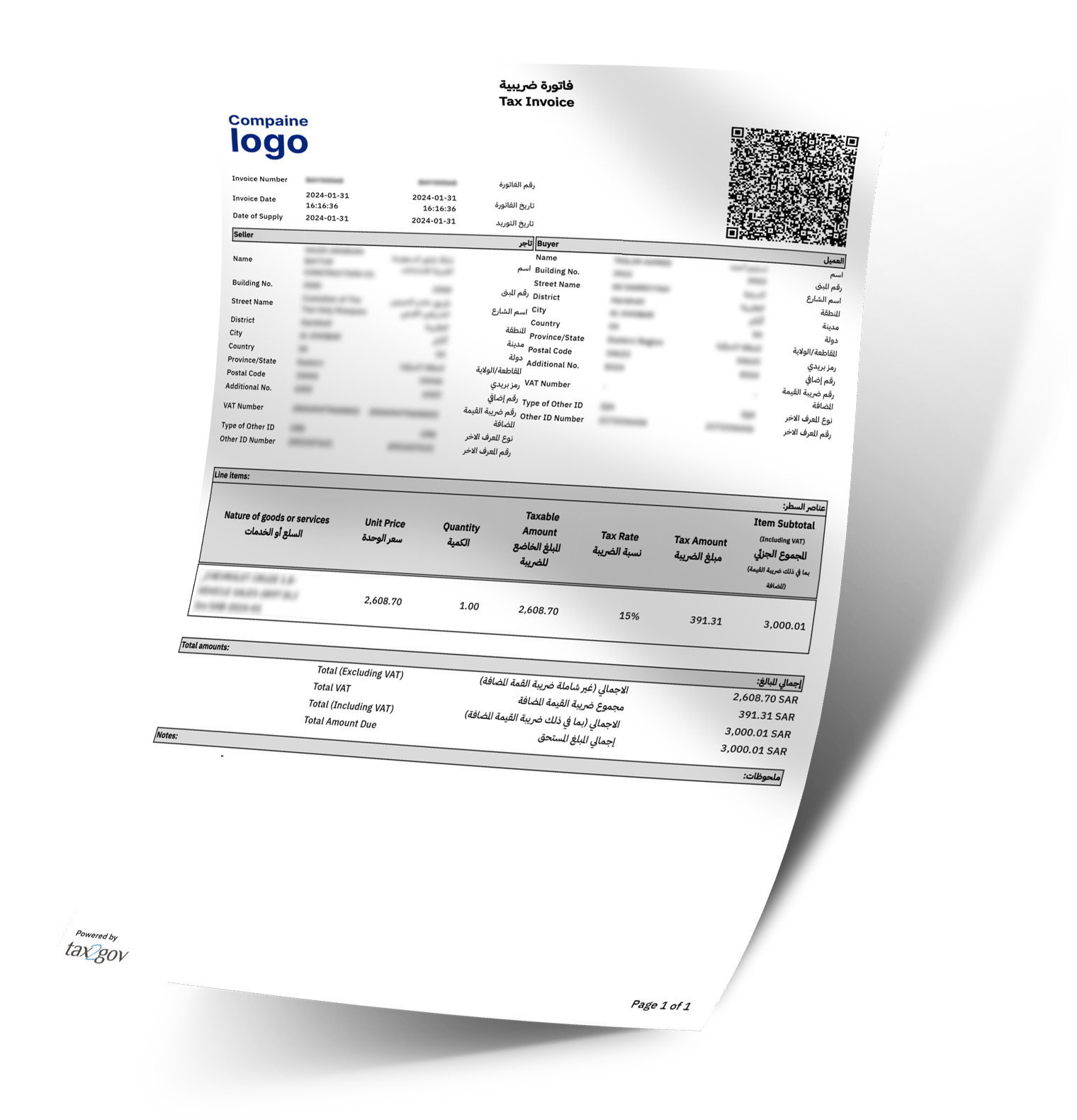
In summary, there are two types of invoices required under VAT in KSA: tax invoice and simplified tax invoice. The choice between them depends on the value of the supply. If the supply exceeds SAR 1,000, a tax invoice is necessary; if it’s under SAR 1,000, a simplified tax invoice suffices. It’s important to highlight that even for supplies to unregistered individuals, a tax invoice must be issued if the value exceeds SAR 1,000 under the VAT regulations in KSA.